

The Myth of Flat-Earth Feminism
Solidarity is a lie told by those who do not understand the spatial arrangements of their own confinement.
For over a century, so-called “mainstream” feminist theory has operated on a flat-earth model of oppression. It has tended to treat “women” as a single, homogenous population trapped on a singular plane, enduring a uniform weight of dominance. This is not merely an intellectual oversight; it is a strategic catastrophe. By insisting on a flat, universal sisterhood, it has systematically ignored the carceral geography of the patriarchal state and has, in consequence engendered significant resistance and pushback from women who would gladly declare themselves feminist, but in the very same way that thinking people do with democracy, for instance, or with love – they agree on the general principles and know they must adapt and customise it to fit.
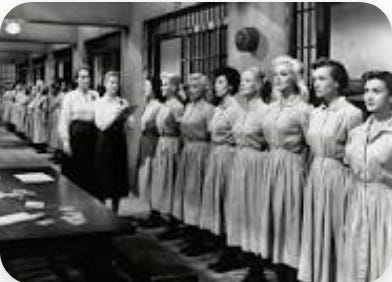
We must discard this infantile illusion, therefore. It smacks of hegemony. Patriarchy does not operate as a single, uniform room; it functions like a sprawling, highly specialized global prison. It does not house us all in the same cellblock; inmates are assigned to a cell-block based on the roles they perform within the prison, but every single wing is locked from the outside.
The genius of this prison lies in its division. The warden has constructed different cellblocks with vastly different material realities, structural expectations, and psychological boundaries. To the west lies Cellblock A – the Gilded Cage, where proximity to power is traded for aesthetic compliance, biological starvation, and behavioral containment.
To the south lies Cellblock B – the Labour Yard, where raw, uncompensated somatic, emotional, and intellectual labour is extracted without the luxury of velvet curtains or the sedative of “protection.”
And other blocks in other directions.
The tragedy of our collective history is that we have mistaken the differences between our cells for a difference in our fundamental status and in so doing, have allowed the warden to use spatial segregation to prevent a unified uprising. The inmates of the Gilded Cage have historically spent their energy begging for warden privileges, corporate keycards, and a softer mattress, while the inmates of the Labour Yard have been left to absorb the raw physical violence of the machine.
If we are ever to get out of this prison, then, we must perform a forensic investigation of this carceral layout. We must understand exactly how the walls are structured, who specifically has been deputized to hold the illusory keys, and why the only logical, strategic response to this system is not integration, representation, or redecoration, but absolute, uncompromised demolition.
The Gilded Cage is Still Locked from the Outside
To analyze Cellblock A is to understand the tragedy of the ornamental asset. Historically, the white woman’s value under the imperialist white supremacist capitalist patriarchy is tied entirely to her utility as a status symbol and a biological vessel for patriarchal lineage.
The system demands that she remain physically fragile, emotionally submissive, and intellectually quiet. The extreme dieting, the relentless aesthetic labour, and the performance of effortless perfection are the daily prison chores of Cellblock A. This constant physical diminishment is a form of self-inflicted systemic policing, where the inmate is conditioned to spend her own cognitive bandwidth and physical vitality to ensure that her body conforms to the narrow parameters of her cell. Her confinement is psychological and aesthetic; a golden pillory that suffocates the soul even while keeping the skin pristine.
This somatic containment has evolved from the Victorian corset to the modern metabolic corset. Today, the intense cultural pressure to be “skin and bone”, accelerated by pharmaceutical interventions and the glorification of hyper-thinness, serves as a literal mechanism of physical disarmament. A body that is biologically depleted is a body that lacks the caloric reserves for rebellion. By keeping the inhabitants of Cellblock A in a state of chronic, self-directed starvation, the patriarchy ensures they remain too weak and fatigued to mount an insurrection. Their cognitive energy is completely consumed by the labour of self-optimization, leaving them with no surplus capacity to interrogate the hand that locks the door.
Crucially, her pedestal is not a platform of power; it is an unstable column. Her protection remains entirely conditional: she is safe from the overt violence of the labour yard only as long as she remains compliant, silent, and small. But, the minute she even attempts to step down from the pedestal to assert genuine, unnegotiated agency, the illusion of protection vanishes. The warden instantly withdraws his security, and she is reminded that she does not own her life, her outcomes, or even her own name! She is merely a beautifully decorated custody asset, tightly policed so as to ensure the preservation of the aesthetic and genetic “purity” of the ruling class. When she speaks out of turn, she is instantly cast out of the parlour and exposed to the cold reality of the elements, clear demonstration that her “privilege” was never sovereignty, it was merely a conditional reprieve from raw physical violence, purchased with her own submission.
The Labor Yard Runs on Raw Extraction
While Cellblock A is suffocated by silent compliance, Cellblock B is crushed by relentless noise and physical extraction. The Black woman is denied the patriarchal luxury of the pedestal. Under the historical legacy of Partus sequitur ventrem where the child follows the condition of the mother, and its modern capitalistic descendants, her body is treated as natural, uncompensated infrastructure.
She must be strong enough to carry the heavy lifting of the workforce, resilient enough to absorb systemic trauma without cracking, and silent enough not to disrupt the prison’s daily operations. If the white woman is policed to preserve her “purity,” the Black woman is policed to maximize her somatic output. Her cellblock has no drywall or velvet curtains; it is concrete, steel, and direct exposure to the elements.
This dynamic manifests in the modern world through the exhausting expectation of the “Strong Black Woman” schema. This is not a compliment; it is an extractive strategy. The system demands that she serve as the ultimate shock absorber for both racial and gendered violence, neutralizing institutional toxicity without requiring emotional maintenance, wage adjustments, or structural relief. This expectation has severe physiological consequences, however, with none of which the system concerns itself. Sociologists and public health researchers refer to this as “weathering” – the accelerated aging and physical degradation of the body caused by chronic exposure to systemic stress. The high maternal mortality rates, the prevalence of autoimmune disorders, and the sheer physical exhaustion endemic to Cellblock B are the literal scars of the labour yard. The system runs on her life expectancy.
The intellectual brilliance, physical stamina, and nurturing labour of the Black woman are continuously mined to subsidize the comfort of the other blocks and the wealth of the warden, leaving her community structurally starved of the very resources she works to produce. She is hyper-surveilled and hyper-penalized, denied the right to vulnerability, and expected to perform the daily miracle of survival under conditions of perpetual economic and physical attrition. While the Gilded Cage is designed to make women invisible through minimization, the Labour Yard makes women hyper-visible as hyper-capable draft animals. She is never permitted to be weak, which means she is never permitted to be human.
The Illusory Keys of the Deputy Warden
The ultimate genius of the patriarchal carceral state is the “Deputy Warden” dynamic. The warden does not need to guard every cell door because he has convinced the inmates of Cellblock A that their survival depends on keeping the inmates of Cellblock B locked up and walking in line.
By granting white women racial superiority, the patriarchy purchased their complicity. The white woman is given the social and cultural authority to define “professionalism,” “respectability,” and “legitimate feminism.” She uses these keys to lock Black women out of the boardroom, the funding circles, and the halls of power, falsely believing that this gatekeeping makes her a partner in the firm. When a white female executive polices the tone, the hair, or the assertiveness of her Black colleagues in the name of “organizational fit,” she is performing the warden’s administrative violence and mistaking her corporate keycard for a deed of ownership.
This performance of gatekeeping is often masked in the language of modern “corporate diversity” or “inclusion initiatives.” In these spaces, the deputy warden uses her position to select only those inmates from Cellblock B who are willing to perform the same respectability politics she has mastered. She rewards compliance and penalizes any authentic assertion of sovereignty. If an inmate from the labour yard raises her voice to challenge the systemic theft of her intellectual property, the deputy warden will deploy her own weaponized fragility – tears, panic, or accusations of “aggression” – to trigger the warden’s security apparatus. The Black woman is, thus, silenced, and the deputy warden’s fragile safety is restored.
But this is a lethal, historic miscalculation. A deputy warden is still an inmate. The keys she holds are illusory; they can lock the doors of Cellblock B, but they can never open the prison’s front gate. The warden grants her a longer leash and a seat near his table only on the condition that she remains an active administrator of his violence. When the economic or political crisis hits, or when she dares to step out of her ornamental box and demand true, independent sovereignty, the warden will strip her of her keys, revoke her clearance, and remind her of her cell number without a moment’s hesitation. She is a buffer class, designed to absorb and redirect the rage of the labour yard so that the warden never has to face the consequences of his extraction.
The Only Way Out is Demolition
“Mainstream” feminism has failed, historically, partly because the prison is divided into these distinct cellblocks. “Gilded Cage feminism” seeks, merely, to make Cellblock A larger, more luxurious, and more comfortable. It asks for better amenities, higher allowances, corporate representation, and the right to walk the courtyard without the warden’s permission.
This is not liberation; it is interior decorating. That is a re-negotiation of the conditions of one’s imprisonment.
The fundamental limitation of Gilded Cage feminism is that it is inherently conservationist. Because the Gilded Cage’s value is derived entirely from its proximity to the warden’s table, its occupants are terrified of demolition. They fear that if the walls of the prison fall, they will lose their fragile racial capital and conditional protection. They would rather negotiate for a softer mattress or improved lighting than face the terrifying, open space of absolute freedom. They have been institutionalized; they cannot conceive of an existence that is not structured by the master’s design. To them, the destruction of the prison is not an opportunity for sovereignty; it is an existential threat to their very survival.
True sovereignty can never be achieved by negotiating with the warden or rearranging the prison furniture, though; to bargain for better terms of confinement is to validate the legitimacy of the guard who locks the door and polices and enforces. The view from the intersection, more specifically the unclouded, raw vantage point of Cellblock B, demands nothing less than the total demolition of the entire structure. Because those in the labour yard have never been offered the intoxicating, deceptive sedative of “protection”; they possess no nostalgic attachment to the prison’s preservation; they see the concrete and iron for exactly what they are – not amenable to reshaping.
This is why a truly revolutionary feminism cannot be led from the parlour of the Gilded Cage. It must be driven by the uncompromised perspective of those who have nothing to lose but their chains.
We do not want to integrate the cellblocks, nor do we seek the false victory of representation within the hierarchy. We do not want a Black woman to be appointed as the new deputy warden, holding the keys to her own sisters’ cages to perform the master’s administrative violence. We do not want a seat at the table of our incarceration. We want to level the walls to the ground, pulverize the foundation, and reclaim the very earth upon which the prison was built. We want absolute, unnegotiated demolition.
The Day After Demolition
But we must confront the most terrifying, mindbending question of all: What happens on the day after the demolition?
When the walls are reduced to rubble and the dust finally settles, we will find ourselves standing in a vast, silent, unmapped void, and it is in this precise moment that the true depth of our incarceration will be laid bare.
The most insidious victory of the patriarchal carceral state is not that it locked our bodies in separate cellblocks! It is that it colonized our very imagination. It built the grid inside our minds. For generations, our definitions of success, leadership, beauty, value, and ambition have been engineered entirely within the parameters of the prison. We have been conditioned to view our very identity through the coordinate system of our confinement. When you have only ever known the prison, the open horizon does not look like freedom; it looks like a terrifying fall into nothingness.
If we level the walls but keep the warden’s definitions of power in our heads, we will inevitably begin to rebuild the prison. We see this daily: the “liberated” woman who finally secures her freedom only to construct a miniature, private gilded cage of her own self-surveillance; the corporate trailblazer who tears down a barrier only to build a new corporate hierarchy that extracts the labour of her sisters. We reproduce the grid because the grid is the only map we know how to read.
Demolition, therefore, cannot merely be an act of physical destruction. It must be an act of ontological erasure. We must dismantle not just the stone, but the psychological scaffolding of the self. We must have the courage to ask: Who am I when I am no longer defined by my resistance to the warden? Who am I when I am no longer performing for the Gilded Cage, nor managing to survive the Labour Yard?
To step into true, uncompromised sovereignty is to step into the void of the unmapped. It is to accept that we do not have a pre-fabricated template for what a free human being looks like. We shall have to build our own tables, write our own definitions of wealth, define our own boundaries, and cultivate our own scale, completely outside the coordinates of patriarchal extraction. And we can.
The prison was built on our backs. The earth beneath it belongs to us. Let us grind the foundation to dust, walk out into the open air, and begin the terrifying, magnificent work of writing our own history and geography.